Matosinhos · Historic Masonry
Marine-grade historic masonry treatment in Matosinhos
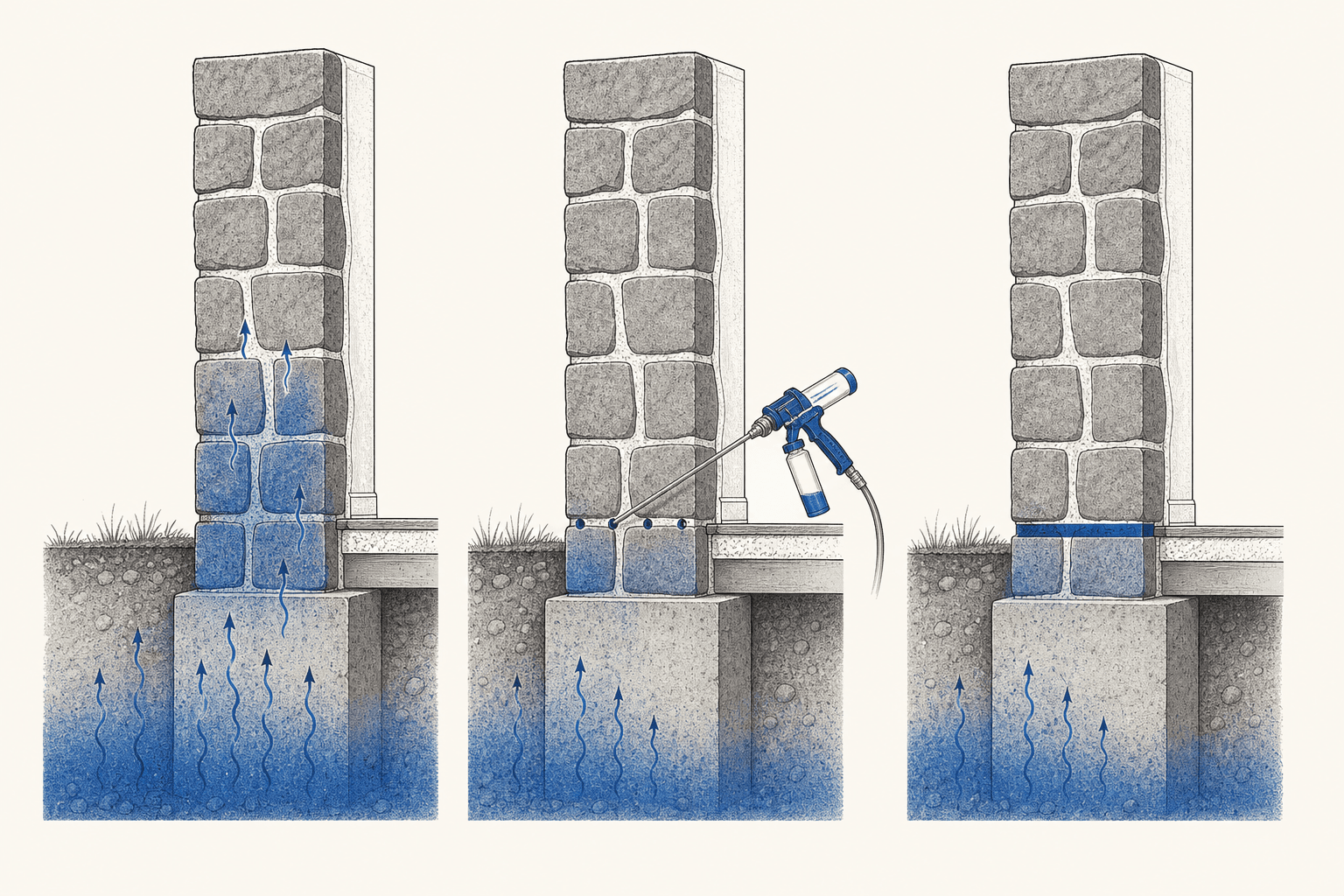
Matosinhos coastal damp differs from inland rising damp. Salt crystals on sea-facing walls can read "wet" on a meter while the moisture source is atmospheric hygroscopicity, not groundwater. Marine-grade remediation addresses both chloride contamination and capillary rise.
Local masonry challenge in Matosinhos
Chloride salt efflorescence on sea-facing granite at Praia de Matosinhos mimics rising damp after storm season. Standard interior injection fixes the base but leaves chloride contamination in the plaster matrix.
Landmarks and neighbourhoods we cover
Atlantic front at Praia de Matosinhos, fishing harbour, cruise terminal vicinity
- Praia de Matosinhos
- Fishing harbour front
- Cruise terminal vicinity
What we deliver on site
- Heritage-sensitive moisture survey (electrical resistance + carbide where permitted)
- Lime-mortar analysis and mortar-bed DPC injection
- Salt-neutralising poultices for chloride contamination
- Vapour-open replaster with NHL 3.5 lime and sand
- Breathable exterior coatings (silane, not film-forming acrylic)
Typical timeline: Coastal remediation: 8–10 weeks including extended salt poulticing.
Local FAQ
Full service specification → · All services in Matosinhos · Treatment cost guide